Hey there! I’m a supplier of Echelle gratings, and I’ve seen firsthand how crucial it is to pick the right one for your experiment. In this blog, I’ll share some tips on how to make that choice. Echelle Grating

First off, let’s talk about what Echelle gratings are. They’re a special type of diffraction grating that can disperse light over a wide range of wavelengths. They’re super useful in spectroscopy, where you need to analyze the light emitted or absorbed by a sample.
So, how do you choose the right Echelle grating? Well, there are a few key factors to consider.
1. Wavelength Range
The first thing you need to think about is the wavelength range you’re interested in. Different Echelle gratings are designed to work best in different wavelength regions. For example, if you’re working in the visible spectrum (around 400 – 700 nm), you’ll need a grating that’s optimized for that range. On the other hand, if you’re looking at infrared or ultraviolet light, you’ll need a different grating.
When you’re choosing a grating, make sure to check the manufacturer’s specifications for the wavelength range. They’ll usually give you a minimum and maximum wavelength, as well as the efficiency of the grating at different wavelengths. You want to pick a grating that has high efficiency in the range you’re interested in.
2. Resolution
Resolution is another important factor. It refers to the ability of the grating to separate closely spaced wavelengths. The higher the resolution, the better the grating can distinguish between different wavelengths.
The resolution of an Echelle grating depends on a few things, like the number of grooves per millimeter and the order of diffraction. Generally, gratings with more grooves per millimeter and higher orders of diffraction have better resolution. But keep in mind that higher resolution gratings can also be more expensive.
You need to figure out what level of resolution you need for your experiment. If you’re just doing some basic spectroscopy, a lower resolution grating might be fine. But if you’re looking at very fine spectral features, you’ll need a high-resolution grating.
3. Blaze Angle
The blaze angle is the angle at which the grating is designed to diffract light most efficiently. It’s an important parameter because it affects the efficiency of the grating at different wavelengths.
When you’re choosing a grating, you want to pick a blaze angle that’s appropriate for the wavelength range you’re working in. The manufacturer will usually recommend a blaze angle for different applications. Make sure to follow their recommendations to get the best performance from your grating.
4. Groove Density
The groove density is the number of grooves per millimeter on the grating. It’s related to the resolution of the grating, but it also affects the efficiency.
Higher groove density gratings generally have better resolution, but they can also have lower efficiency. On the other hand, lower groove density gratings have higher efficiency but lower resolution. You need to find a balance between resolution and efficiency based on your experiment’s requirements.
5. Mounting and Compatibility
You also need to think about how you’re going to mount the grating and whether it’s compatible with your experimental setup. Some gratings come with special mounting options, like a holder or a mount that can be adjusted. Make sure to choose a grating that’s easy to install and fits well with your equipment.
Also, consider the size of the grating. You need to make sure it’s the right size for your spectrometer or other optical device. If the grating is too big or too small, it might not work properly.
6. Cost
Let’s face it, cost is always a factor. Echelle gratings can vary in price depending on their quality, resolution, and other factors. You need to set a budget for your experiment and find a grating that fits within that budget.
But don’t just go for the cheapest option. Remember, a high-quality grating will give you better results and last longer. So, it’s worth investing a little more if you can afford it.
7. Manufacturer Reputation
Finally, consider the reputation of the manufacturer. You want to buy from a company that has a good track record of producing high-quality Echelle gratings. Look for reviews and testimonials from other customers to get an idea of the company’s reliability.
A good manufacturer will also provide good customer support. If you have any questions or problems with your grating, you want to be able to get help quickly.
So, those are the main factors to consider when choosing an Echelle grating for your experiment. It might seem like a lot to think about, but if you take the time to do your research, you’ll be able to find the right grating for your needs.
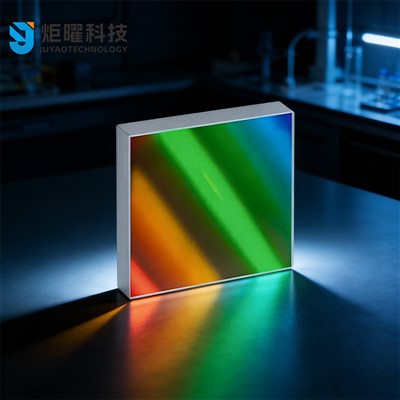
If you’re in the market for an Echelle grating, I’d love to help you out. As a supplier, I have a wide range of gratings to choose from, and I can provide you with all the information you need to make an informed decision. Just reach out to me, and we can start discussing your requirements.
Broadband Infrared Grating In conclusion, choosing the right Echelle grating is crucial for the success of your experiment. By considering factors like wavelength range, resolution, blaze angle, groove density, mounting, cost, and manufacturer reputation, you can find a grating that will give you the best results. So, don’t hesitate to get in touch if you need any help with your grating selection.
References
- Born, M., & Wolf, E. (1999). Principles of Optics: Electromagnetic Theory of Propagation, Interference and Diffraction of Light. Cambridge University Press.
- Hecht, E. (2017). Optics. Pearson.
- Palmer, C. E. (2005). Handbook of Optical Constants of Solids. Academic Press.
Jilin Juyao Technology Co., Ltd.
As one of the leading echelle grating manufacturers and suppliers in China, we offer a wide range of products with superior quality. Please feel free to wholesale customized echelle grating from our factory. Welcome to view our website for more information.
Address: Room 101, No. 2 Huiwen Road, Nanguan District, Changchun City, Jilin Province, China
E-mail: jyoptix@outlook.com
WebSite: https://www.jyoptix.com/
