Alright, let’s cut to the chase—if you’re deep in the metal forging game, you’ve probably heard of a car-bottom forging furnace. But if you’re new, or someone who’s been shopping around for reliable furnace tech and wants to skip the sales fluff, you’re in the right spot. I’ve been supplying these bad boys for over a decade, and let me tell you, most folks don’t realize how much goes into making one of these things work exactly like it needs to for forging, not just heating metal. Let’s break this down like I’d explain it to a new forging plant foreman over a coffee—no PhD jargon, no vague claims. Car-Bottom Forging Furnace
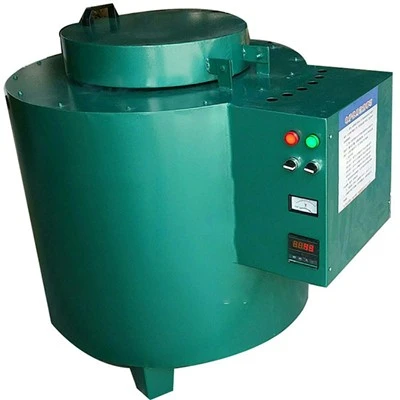
First off, what even is a car-bottom furnace? It’s not like your grandma’s oven, that’s for sure. Think of it as a giant, insulated metal box with a flat, removable “bottom” (that’s the car, duh) that rolls out on rails. You load all your forged blanks, parts, or whatever metal you’re heating onto that car, roll it back inside, seal it up, and crank the heat. The name’s on the nose, but the genius is in how it’s built to handle forging’s specific chaos. Most people mix it up with a box furnace, but box furnaces are tiny, batch-heat one small part at a time. Car-bottom is for big batches, heavy loads, stuff that’s too bulky to lift into a regular setup—like large gear blanks, railway components, or even heavy axle casings. My company supplies these to mid-sized and large forging shops across North America, and the number one question I get is, “How does it actually keep heat consistent, not just blow hot air?” That’s the core of the working principle.
Let’s start with the three main systems that make this thing tick, in order of how they work: the insulated chamber, the moving car, and the heat source. Wait, but it’s not just each part—it’s how they sync, like a well-oiled team (pun totally intended, and yes, I work on these so I get to make those).
First, the chamber. No surprise, it’s insulated—but not with just any rock wool or fiberglass. For forging, you need materials that can take sustained high heat (we’re talking 1,100°C up to 1,300°C for most carbon steels, sometimes even higher for alloys) without breaking down. The walls, ceiling, and even the door are lined with refractory bricks—specialized alumina-silicate or high-alumina bricks, not the stuff you use for a backyard BBQ. These bricks are designed to trap heat, not let it escape like a bad window in winter. Why is that crucial? If heat leaks out, your metal heats unevenly—one side’s too hot, starts to oxidize (that’s the crumbly, useless scale you don’t want), the other’s too cold, so it doesn’t forge right. A lot of cheap suppliers skimp on insulation, but that’s a false economy—you waste tons of fuel, and your parts get rejected. I always tell customers: the insulation isn’t a cost, it’s a profit saver. Less energy = lower bills, more consistent parts = fewer rejects.
Now the star of the show: the car. This isn’t just a steel flatbed. It’s a heavy-duty steel frame with its own set of insulation layers, plus a solid steel top plate that the metal sits on. The car rolls on heavy-duty rails that line the front and back of the chamber, and there’s a sealing system at the door end—usually something like a rubber or ceramic gasket that inflates or compresses when the car’s all the way inside, so no hot air sneaks out the gap. Wait, why is the car insulated? If the car was just cold steel, it would suck heat away from the bottom of your parts, leaving a “cold spot” that would mess up the forging. I’ve seen this happen with cut-rate furnaces—customers call me in, and the bottom of their gear blanks are still room temp after 4 hours, while the top is red hot. Insulated car fixes that. Also, the car has wheels that are rated for extreme heat, but they’re cooled too—wait, that’s a secret most suppliers don’t tell you. The wheel bearings are either water-cooled or made of high-temp alloys, so they don’t seize up after 100 heat cycles a month. That’s a big deal—no one wants to be stopping production because the car got stuck.
Next, the heat delivery system. This is where most car-bottom furnaces differ from each other, and where I’ve seen the biggest gaps in quality. The two main types are gas-fired and electric. Let’s be real: gas is still the go-to for high-volume forging, because it’s faster to heat, cheaper per MMBtu than electricity for large loads. But it’s not just a gas burner—you need a uniform heat distribution system. If you just stick burners on the wall, the hot air will rise, so the top of your load is too hot, bottom too cold. That’s why we (my company) use recirculating fans. Wait, let’s break that down: inside the chamber, there are axial or centrifugal fans mounted high up (or sometimes low, depending on load size) that pull hot air and push it through ductwork, blowing it evenly across every part of the car. It’s like when you use a box fan in a small room to keep the temp consistent, but scaled up to a 10×15 foot chamber. For electric furnaces, it’s resistive heating elements wrapped around the chamber walls, but again, the recirculation is key—without it, elements near the door cool down faster, leading to uneven heat. I work with both, but I lean gas for most customers because it’s more flexible for different steel grades. Electric is good for smaller, more precision-focused runs, but only if the distribution is on point.
Wait, let’s get into the actual cycle step by step, so it’s not just parts—let’s walk through how it works when you fire it up. First, prep: you load your metal parts (say, 12 gear blanks) onto the car, evenly spaced—don’t pile them all in the middle, that blocks air flow. Then, you send a signal to the control panel (modern ones are touchscreen, old-school are analog, but we mostly do digital now) to roll the car into the chamber. Once it’s seated, the sealing system engages, and the chamber door closes and latches. Next step is pre-purge: this is non-negotiable. You have to blow out all the residual air in the chamber, because if there’s oxygen, when you crank the heat, your metal will oxidize like crazy. No pre-purge = wasted metal. That’s a safety and quality step that cheap suppliers skip to save time, and it bites customers in the ass later.
Once pre-purge is done, you turn on the burners (or turn on the elements) and the recirculating fans kick in. The fans keep moving air so that every inch of the chamber hits your set temp—usually between 900°C and 1,200°C, depending on what you’re forging. The control system monitors this 24/7 via thermocouples—those are the little temp sensors we mount all over the chamber, not just one. If one sensor says 10°C too low in a corner, the fans speed up a little or a burner fires harder in that area. It’s a closed loop, like your home thermostat but way more accurate. A lot of new forging operators think you just “set it and forget it,” but you have to make sure the recirculation is working—if a fan burns out, your temp readings are garbage.
Then, the hold phase. Once the metal reaches the target temp, you don’t just pull it right away. You hold it there for a set amount of time—usually 30 to 60 minutes, depending on part thickness. That’s called “soaking” the metal. Why? Because if the outside is hot and the inside is cold, when you forge it, the outer layer will deform unevenly, or crack. The car-bottom furnace’s uniform heat makes soaking way more consistent than, say, a batch furnace, because all parts are exposed to the same air. I’ve had a customer who was using a cheap furnace where they had to hold parts for twice as long just to get the inner core hot—switching to our setup, they cut soak time by 30%, which boosted their production by 15% overnight. That’s the kind of win I love to see.
When the hold time is done, you hit the “unload” button. The burners turn off, the chamber depressurizes a little (for gas furnaces), the sealing gasket deflates, and the car rolls out on the rails. Now, you hook up a forging press right next to the furnace, so you don’t have to wait for the parts to cool. That’s the whole point of a car-bottom furnace—minimizing downtime between heating and forging, because hot metal is easier to shape.
Wait, but what about common problems that people run into? Let’s be real, no furnace is perfect, but understanding the working principle helps you fix issues instead of panicking. The most common? Hot spots. That’s almost always a broken recirculation fan, or blocked ductwork from metal scale blowing around. Cold spots? Usually a worn-out gasket, so air is leaking in, or the car’s insulation is damaged. Another one is oxidation—almost always from skipping the pre-purge step, or too much oxygen in the chamber. My team does routine maintenance checks to catch those before they become downtime issues, which is why we don’t just sell furnaces—we support them, too.
Let me make this clear for anyone still wondering: the working principle isn’t just “it gets hot inside.” It’s a coordinated system of insulation (to trap heat), a mobile car (to fit big loads and seal tight), and recirculated heat delivery (to ensure every part is evenly heated). The magic is that it’s designed for forging specifically—not baking bread, not melting metal, but heating solid metal to the exact temp it needs to be to be shaped without cracking or deforming.
Now, if you’re in the market for a car-bottom forging furnace, don’t waste your time with suppliers who cut corners on insulation or skimp on recirculation. Cheap units might seem like a steal at first, but they’ll cost you more in fuel, rejected parts, and downtime down the line. I’ve been doing this long enough to know that a furnace is a long-term investment—you want something that works as hard as your shop does, not something that breaks every other month.
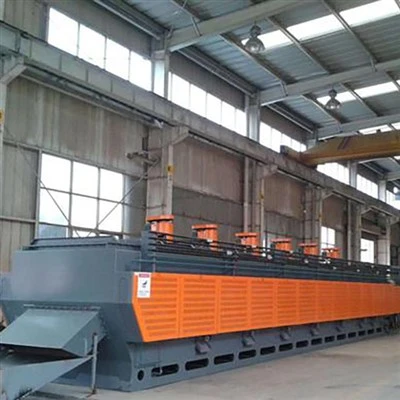
If you’re tired of inconsistent heat, wasting fuel, or production delays due to faulty furnace tech, reach out to my team to chat through your specific needs. Whether you’re heating small parts for automotive components or huge railway parts, we can custom-build a furnace that fits your load size, production volume, and temp requirements. No one-size-fits-all garbage, just reliable equipment that works for forging.
Gas Furnace References:
- ASM International. (2019). Heat Treater’s Guide: Practices and Procedures for Irons and Steels. ASM International.
- Lundberg, S. (2021). Industrial Furnaces: Design, Operation, and Maintenance. Industrial Press Inc.
- National Fire Protection Association. (2020). NFPA 86: Standard for Ovens and Furnaces. National Fire Protection Association.
Danyang Dingfeng Industrial Furnace Co., Ltd.
Danyang Dingfeng Industrial Furnace Co., Ltd. is one of the most experienced car-bottom forging furnace manufacturers and suppliers in China, also supports customized service with low price. Please feel free to wholesale high quality car-bottom forging furnace made in China here from our factory. For pricelist, contact us now.
Address: Lizhuang Economic Development Zone, Danyang City
E-mail: saleszk@dffurnace.com
WebSite: https://www.dffurnace.com/
