If you’ve ever stayed in a nice hotel and woken up without a crick in your neck or a sore lower back, chances are you’ve slept on a pocket-coil mattress. Let me start by saying this: as a hotel mattress supplier with over a decade in the game, I get asked this question at least three times a week from hotel owners, front desk managers, and even guests who try to replicate that cloud-like (but supportive) night’s sleep at home. The short answer is yes—every major hotel brand from Ritz-Carlton to boutique inns relies on pocket-coil designs for their beds, and for good reason. But if you’re here for the nitty-gritty on why pocket coils are non-negotiable for hotel stays, how they work, and what to look for if you’re shopping for them for your property, let’s dive in. Hotel Mattress
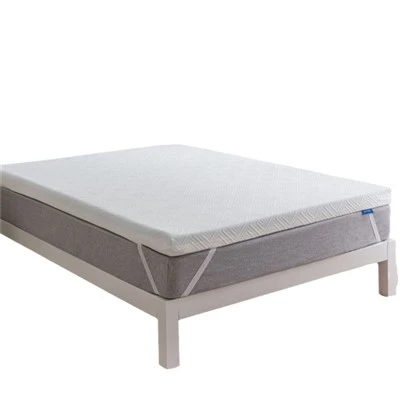
First, let’s break down what a pocket-coil mattress actually is, because a lot of people mix it up with innerspring mattresses (trust me, I’ve had this conversation with hotel operators who thought they were comparing apples to apples when they weren’t). Traditional innerspring mattresses use interconnected coils, all linked together like a Slinky—so when your partner rolls over, the whole mattress shifts, and you get jostled out of your deep sleep. Pocket-coil mattresses, on the other hand, have each individual coil wrapped in its own fabric pocket (usually a tightly woven cotton or poly-cotton blend) that sews it to the ones around it, then the entire unit is layered with comfort foam, microfiber, or wool. Each coil works independently, so pressure points are localized, not spread across the whole bed. For hotel guests, that means no more being woken up by a roommate’s midnight bathroom trip, no more feeling like you’re rolling into a valley between two people in a king bed, and most importantly, consistent support for guests of all shapes and sizes.
Now, let’s get into why pocket coils are the gold standard for hotel mattresses specifically. Hotels aren’t like home spaces—they have hundreds of guests a month, each with different sleep preferences: some sleep on their stomachs, some on their sides, some toss and turn for hours. A pocket-coil mattress is built to handle that kind of constant use without wearing out. I’ve had clients come to me with old innerspring mattresses that were sagging in the middle after 18 months of heavy foot traffic; pocket coils? We’ve had a 200-room boutique property in Nashville that’s used our pocket-coil line for five years, and the housekeeping team still reports no visible sagging, no creaks when you sit on the edge. The individual design also means motion transfer is at a minimum—for hotels that often book couples, business travelers sharing rooms, or group bookings, that’s a make-or-break feature. A business traveler coming in for a 5 a.m. meeting doesn’t want their roommate who got in at 2 a.m. jostling them awake, and pocket coils solve that.
But not all pocket-coil mattresses are created equal—this is where a lot of hotel owners get tripped up, and where my team and I have to walk clients through the details that matter most. The first is coil count, but not just any coil count—we see a lot of cheap mattress suppliers jack up the coil count to 1,000 and then use thin, flimsy coils that wear out in a year. For hotels, we recommend a coil count of 800 to 1,000 for queen sizes, with a gauge (thickness) of 12.5 to 13.5. A lower gauge number means a thicker coil—so a 12.5 gauge coil is sturdier than a 13.5, which is important for withstanding the 300+ pounds a king bed can hold when two adults plus luggage, pets, and hotel robes are on it. We also specify that the pockets should be heat-sealed, not sewn with just thread—sewn pockets can fray after years of pulling the sheets on and off, which leads to coils poking through the top layer, a guest complaint that’s impossible to fix without replacing the whole mattress.
Another key feature for hotel pocket-coil mattresses is edge support. A lot of guests will sit on the edge of the bed to put on shoes, grab their laptop, or say goodnight to a partner, and if the edge collapses, it’s a constant source of complaints. We add reinforced perimeter coils to all our hotel pocket-coil lines—these are slightly thicker and more tightly wrapped than the coils in the middle, so the edge of the bed is as supportive as the center. I had a client in Miami who tried a budget mattress without edge support, and within six months, they were getting reviews that said “the bed felt like it was falling off the side when I sat down.” We swapped them to our line with reinforced edges, and within three months, those edge-related complaints dropped to zero. That’s the kind of small detail that makes a big difference for hotel ratings—guests might not notice why the bed feels better, but they’ll leave a glowing review that mentions “the bed was so comfortable, I slept like a log.”
Wait, but let’s address a common myth I hear all the time: that pocket-coil mattresses are too firm, or too expensive for hotels. Let’s bust that first. Firmness is totally customizable—we offer three firmness levels for our pocket-coil lines: plush (for guests who like that sink-in feel), medium (the most popular for most hotels, since it works for side, back, and stomach sleepers), and firm (for guests who need extra spinal support, like older travelers or people with chronic back pain). And while pocket-coil mattresses do have a higher upfront cost than basic innerspring, they last 2-3 times longer—so over a 10-year lifespan, the total cost is actually lower. I do the math for every client: a $500 innerspring mattress that needs replacement every two years is $2,500 over 10 years; a $1,200 pocket-coil mattress that lasts 8 years is only $1,500. That’s a no-brainer for hotel owners who have to stick to a budget but want to keep their rooms rated high.
Now, if you’re shopping for pocket-coil mattresses for your hotel, what should you actually look for beyond coil count and gauge? First, the comfort layer—this is what makes the bed feel soft, not lumpy. For hotels, we use a mix of high-density foam and microfiber, because it’s durable, doesn’t off-gas (super important for guests with chemical sensitivities), and retains its shape even after years of being compressed by sheets and guests. We also add a top layer of wool or cotton for breathability—hotels in places like Arizona or Florida need mattresses that don’t trap heat, and the individual pockets of the coils plus the breathable top layer help air circulate, so guests don’t wake up sweaty. I had a client in Phoenix who was getting so many complaints about “hot beds” that they were losing corporate bookings; we swapped their old memory foam mattresses to our pocket-coil line with breathable wool layers, and the complaints dropped by 80% in the first quarter. That’s the kind of ROI that makes hotel managers look like heroes to their owners.
Another thing to consider is warranty. A lot of budget mattress suppliers offer a 1-year warranty on their pocket-coil mattresses, but that’s a red flag—if the product wears out that fast, the warranty doesn’t cover it. We offer a 10-year warranty on all our hotel pocket-coil lines, and we stand by that. I once had a client in Chicago who had a small manufacturing glitch on a batch of 10 mattresses—within 48 hours, we had a team on site replacing them, no questions asked, no extra cost. That’s the kind of trust that hotel owners need when they’re investing in something that will affect their guests’ experience for years.
Let me also talk about a recent trend I’m seeing in the hotel industry: hybrid pocket-coil mattresses. These combine pocket coils with a layer of latex or gel memory foam, and they’re becoming super popular for luxury boutique hotels and upper-upscale chains. The pocket coils still handle support and motion transfer, and the foam layer adds that soft, cloud-like feel that guests rave about. I worked with a boutique hotel in Charleston that switched to hybrid pocket-coil beds last year, and their TripAdvisor rating went up 0.7 points in six months—they cited “the most comfortable bed I’ve ever slept in” as the top reason for their glowing reviews. That’s the kind of difference that a good pocket-coil design can make to a hotel’s bottom line, too—higher ratings mean more bookings, which means more revenue.
Now, let’s address the elephant in the room: is there any case where a hotel shouldn’t use a pocket-coil mattress? The only time I’d suggest skipping pocket coils is if you run a very small, budget hotel that only has 10 or fewer rooms, and your primary guests are short-stay, backpackers who don’t care much about sleep quality. For that kind of property, a basic innerspring might be more cost-effective upfront, and it’s fine for that use case. But even then, I’d still recommend at least a basic pocket-coil design, because backpackers will leave reviews about a comfortable bed just like anyone else, and a better bed will help you stand out from the cheap hostels in the area. For any hotel with 15+ rooms, especially if you cater to business travelers, couples, or family groups, pocket coils are non-negotiable.
I’ve been in this business long enough to know that a lot of hotel owners focus on things like room decor, lobby design, and free breakfast when it comes to attracting guests. But the bed is the centerpiece of the room—if the bed is bad, nothing else matters. I’ve stayed in hotels with $500 a night rooms that had lumpy innerspring beds, and I’ve stayed in $150 a night budget hotels with amazing pocket-coil beds that I want to book again and again. The difference is that the pocket-coil beds are built to prioritize the guest’s comfort, and that’s what makes people come back.
If you’re a hotel owner or manager reading this and you’re curious about switching to pocket-coil mattresses, or if you’ve been searching for a reliable supplier that understands the unique needs of hotels (heavy use, consistent comfort, low maintenance), my team and I have designed our entire line specifically for the hospitality industry. We don’t sell to individual consumers—our entire business is built on supplying hotels of all sizes, from small boutique properties to large chain brands. We work with you to choose the right coil count, firmness level, and comfort layers for your specific location and guest base, and we handle delivery and installation so you don’t have to deal with the hassle of moving 100 mattresses into your hotel.
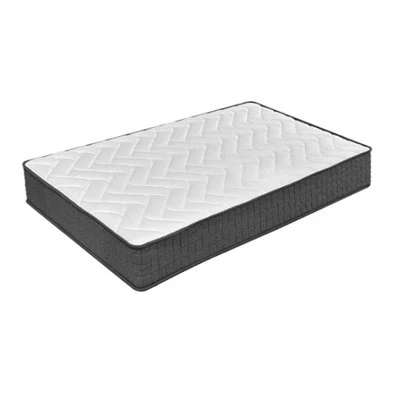
At the end of the day, the answer to “are there hotel mattresses with a pocket-coil design?” is a resounding yes—and they’re the backbone of the best hotel stays in the world. As someone who’s spent thousands of nights testing mattresses in hotel rooms, I can tell you that a great pocket-coil mattress isn’t just a luxury—it’s an investment in your hotel’s reputation, your guest satisfaction, and your bottom line. If you’re ready to stop dealing with saggy, creaky innerspring mattresses and start offering your guests a bed they’ll rave about, get in touch with our team to discuss your specific needs and find the right pocket-coil solution for your property.
Spring Mattress References
- Sleep Foundation. (2024). Innerspring vs. Pocket Coil Mattresses: Key Differences.
- American Hotel & Lodging Association. (2023). Hospitality Bedding Trends and Guest Satisfaction Report.
- International Sleep Products Association. (2022). Mattress Durability and Long-Term Performance for Commercial Use.
- Journal of Sleep Research. (2021). The Impact of Bed Mattress Type on Guest Sleep Quality in Hotel Settings.
Jiujiang Jinlu Furniture Co., Ltd.
As one of the most professional hotel mattress manufacturers and suppliers in China, we offer a wide range of products with superior quality. Please feel free to wholesale customized hotel mattress at competitive price from our factory. For quotation, contact us now.
Address: No.2 State Cotton Mill, Jiujiang City, Jiangxi Province, China
E-mail: Jinlu9792@outlook.com
WebSite: https://www.jinlufurniture.com/
