Hey there, let’s cut to the chase—if you’ve ever stared at the “forged wheel” section of your local shop or scrolled through Instagram car accounts feeling lost, you’re not alone. Most people assume three-piece forged wheels are just a fancy upgrade, but there’s a whole lot more to picking the right set than just picking something that matches your car’s color. As someone who’s been in the three-piece forged wheel game for years (let’s be real, we’ve made hundreds of sets for everything from daily-driven civics to track-ready supercars), I’m here to walk you through this without the jargon that makes you want to close the tab. No stuffy engineering terms, no pushy sales lines—just real talk about what actually matters. Three Piece Forged Wheels
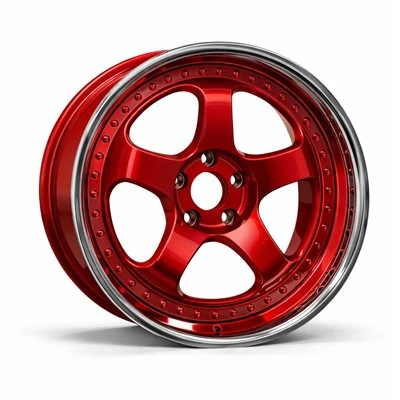
First, let’s get one thing straight: three-piece forged wheels aren’t the same as cast wheels, and they’re way different from one-piece forged ones, too. A three-piece set is exactly what it sounds like: three separate parts. You’ve got the outer rim (that’s the big curved part that holds the tire), the inner barrel (the flat part that sits next to your brake calipers and the wheel hub), and the center disc (the part with the lug holes and the logo). We bolt all three together, sometimes with hidden hardware, sometimes with bold fasteners, so they’re not just stronger than cast—they’re way more customizable. But that customizability is also where people mess up, so let’s break this down step by step.
First up: fitment, and not just the “will it bolt on?” kind. This is the make-or-break stuff that so many people skip, and then they end up with wheels that rub, or look awkward, or even cause issues with their brakes. Let’s start with the basics you probably already know: bolt pattern (the number of lugs and the distance between them—like 5×114.3 for most JDM cars, or 5×120 for BMWs) and center bore (that hole in the middle that fits over your hub). If your center bore is too small, it won’t fit at all; too big, and you’ll need hub centric rings, which are cheap, but why add an extra step? More importantly, don’t guess on backspacing or offset. This is where people get burned hard. Backspacing is the distance from the back of the wheel’s hub mounting surface to the inner edge of the rim, and offset is the distance from that same mounting surface to the centerline of the wheel. If you get these wrong, two bad things happen: either the wheel sticks way out from your fenders (making your car look like a clown car that hit a curb, or worse, your tires rub the inner fenders when you turn or hit bumps) or it tucks too far in, so it looks like you’re rolling on a donut. Pro tip: if you’re driving a daily, you want a little bit of gap between the tire and the inner fender, not so much that road debris gets kicked back into your wheel wells. If you track your car? You’ll want a touch more clearance, but don’t go so wide that you’re risking tire rub during a hard corner. We always tell customers to cross-reference their car’s factory specs, and if you’re modifying it (lowering springs, bigger brakes), let us know—we can tweak the numbers to fit those changes, no guesswork required.
Next: material and forging quality. Wait, I said three-piece forged, so all three parts are forged, right? Well, yeah, but not all forging is created equal. Most good three-piece wheels use 6061-T6 aluminum, which is the standard for aerospace and automotive parts—strong, lightweight, and not crazy expensive. But some no-name brands will use weaker aluminum, or even cast parts in the barrel or disc to cut costs, which is a huge red flag. Why does this matter? Forged wheels are way stronger than cast because the metal is compressed during the forging process, instead of being poured into a mold and left to cool, which creates weak spots. A three-piece forged set will hold up way better to potholes, track abuse, and even curbs than any cast wheel, and they’ll never crack the way cast ones do. We’ve tested our sets against all kinds of stuff—we’ve run them over curbs at 15 mph, hit potholes that would crack a cast wheel, and they still come back fine. Another thing to check: the rim’s thickness. If you’re driving on rough roads, go for a thicker outer rim— it’s a tiny bit heavier, but it’ll save you from buying new wheels every time you hit a bad pothole. If you’re all about speed and handling? Thinner rims are lighter, so they make your car accelerate faster and stop quicker—just don’t drive over curbs like a maniac.
Now, the fun part: customization, and why three-piece forged is the way to go if you want something that’s actually yours. Unlike one-piece wheels, which come in fixed sizes and colors, three-piece wheels let you mix and match every part. Want a matte black inner barrel, a polished chrome outer rim, and a red center disc with a custom logo? Done. Want to change your wheel size later (like if you upgrade your tire size or just want a new look in a year)? You don’t have to buy a whole new set—we can just swap the outer rim or the barrel, which saves you a ton of money. A lot of our regular customers do this: they buy a set, then a year later, they decide they want black instead of silver, and we swap the barrels for them. That’s the big perk of three-piece over one-piece. Also, if you have custom brakes (like big race brakes), we can machine the center disc to clear those, or even make the inner barrel wider to fit a wider tire—something one-piece wheels can’t do easily. We’ve made sets for guys with turbocharged Civic Type Rs that needed extra clearance for big brake kits, and for a guy with a vintage Porsche 911 who wanted a period-correct look but with modern strength—no job is too specific.
Wait, but hold on—size matters, and not just width. Let’s talk about wheel size: overall diameter, not just width. If you go too big, you’ll mess up your speedometer, your acceleration will feel sluggish, and you might have clearance issues with your fenders or struts. Too small, and you won’t get that aggressive look most people want. A good rule of thumb: don’t go more than 1 inch bigger than your factory wheel diameter for a daily driver. If you’re a track rat, you can go up 1 or 2 inches, but you’ll need shorter tires to keep the overall diameter the same—otherwise, your speedometer will be off, and your gearing will be all wrong. We always calculate the overall diameter for you, so you don’t have to do the math. For example, if your factory wheels are 17×8, you might go to 18×9.5 for a wider tire, but we’ll make sure the total height is almost identical, so your speedo stays accurate. Another size tip: width. Wider tires = more grip, right? But only if your wheel is wide enough to fit that tire. A 245-width tire needs a wheel that’s between 8 and 9 inches wide, and a 275 needs 9.5 to 11 inches. If you put a 275 tire on an 8-inch wheel, it’ll look stretched, handle worse, and wear out unevenly. We can tell you exactly what width to get based on how you drive—daily, track, or a mix of both.
Now, let’s talk about the mistakes people make all the time, so you can avoid them. First: buying based on price alone. Yeah, three-piece wheels are more expensive than cast or even one-piece forged, but if you buy a set from a no-name brand that uses cheap aluminum, you’re going to end up paying more in the long run when they crack or bend. We see this all the time: a guy buys a cheap set off Amazon for $500, and within 6 months, they’re bent from potholes, and he has to buy a real set that costs twice as much. Good three-piece wheels are an investment—they’ll last forever if you take care of them, and they hold their value way better than cheap wheels. Second: ignoring load rating. Load rating is how much weight the wheel can safely carry. If you have a heavy SUV or a truck, you need a higher load rating than if you have a lightweight sports car. If your wheel can’t handle the weight, it’ll bend or crack, especially when you’re carrying heavy cargo or towing. We list the load rating for every set we make, so you don’t have to guess. Third: forgetting about maintenance. Three-piece wheels need a little more care than one-piece, because the bolts that hold the three parts together can loosen over time, especially if you drive hard on track. We send a torque wrench with every set, and we tell you to check the bolts every 5000 miles, or after a track day. Also, polished rims need to be waxed regularly to keep them from tarnishing, and matte finishes need special cleaner—no random stuff from the gas station, it’ll ruin the finish. If you take care of them, they’ll look good for decades.
Wait, one last thing: style. This is the part that’s totally up to you, but there are a few things to keep in mind. If you want a classic look, polished chrome or brushed aluminum outer rims are timeless. If you want something more modern, matte black or bronze is super popular right now. We also do custom anodized finishes, powder coating, even engraving for center discs. Just make sure the style you pick fits your car—don’t put super aggressive, deep-dish wheels on a vintage sedan that’s supposed to have a subtle, classic look. We’ve got designers on our team who can help you pick something that matches your car’s vibe, no matter what you’re driving.
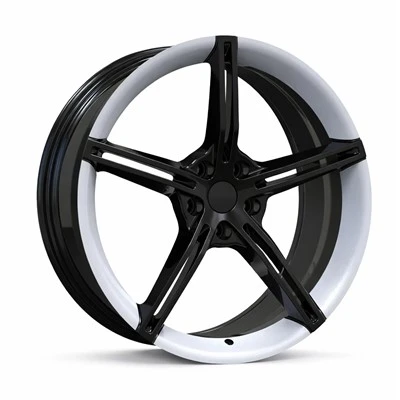
At the end of the day, choosing the right three-piece forged wheels isn’t about picking the biggest, most expensive set you can find. It’s about getting a set that fits your car, your driving style, and your taste—one that doesn’t rub, is strong enough for how you use your car, and looks like it was made specifically for your ride. We’ve been doing this for years, and we’ve helped thousands of guys (and gals) pick the right set, from first-timers to car enthusiasts who’ve been building cars since the 90s. No pushy sales talk, no weird fine print, just honest advice and a product that we stand behind 100%.
Two Piece Forged Wheels If you’re ready to take the next step—whether you’re just curious, have a specific car model in mind, or need help figuring out fitment or size—reach out to us. We’ll send you a free quote, walk you through every step of the process, and make sure you get exactly what you want. No hidden fees, no surprises, just great wheels and great service. Don’t waste another day scrolling through endless options that don’t make sense—let’s get you the wheels your car deserves.
References
- Society of Automotive Engineers (SAE). Forged Aluminum Wheels: Material Properties and Performance Standards. SAE International, 2021.
- Tire and Rim Association. 2023 Yearbook: Wheel Fitment and Load Rating Guidelines. Tire and Rim Association, Inc., 2023.
- Automotive Engineering International. "The Advantages of Three-Piece Forged Wheels for High-Performance Vehicles." SAE International, 2022.
- Federal Motor Vehicle Safety Standards (FMVSS). Part 571.109: New Pneumatic Tires for Vehicles. National Highway Traffic Safety Administration, 2020.
- Aluminum Association. Aluminum for Automotive Wheels: Design and Application Guidelines. The Aluminum Association, 2021.
Hurong (Ningbo) Wheels Co., Ltd.
Hurong (Ningbo) Wheels Co., Ltd. is one of the most professional three piece forged wheels manufacturers and suppliers in China, also supports customized service and OEM service. Welcome to wholesale bulk high quality three piece forged wheels made in China here from our factory. If you have any enquiry about cooperation, please feel free to email us.
Address: Floor.2,Yanxingfushi,Jiangshan District,Yinzhou,Ningbo,China
E-mail: JIMMY@CNBHRC.COM
WebSite: https://www.hrc-wheel.com/
