Hey guys, let’s cut to the chase – finding a bookcase that actually fits your home decor isn’t just about grabbing a big wooden shelf and shoving your books on it. I’ve been in the bookcase game for over a decade now, and let me tell you, 90% of the headaches my customers run into? They either pick something that clashes so bad it looks like it wandered in from a random IKEA aisle, or they waste money on a piece that’s way too big (or way too tiny) for their space. If you’re reading this, chances are you’re staring at a blank wall next to your couch, or cramming books into a corner that’s just not working, and you’re like, “How the hell do I make this not look like an afterthought?” Well, stick around – I’m gonna break this down into stuff that actually works, no fancy decor jargon required. Bookcases

First up, let’s talk about your space – not just the size of the wall, but the vibe of the room. I see so many people skip this step and just shop based on “oh, that’s nice,” but that’s how you end up with a dark, heavy oak bookcase in a tiny, bright studio apartment. What’s wrong with that? For one, it’ll make your already cramped room feel smaller. For two, it’ll clash with all the light, airy decor you probably picked out to make the space feel open. Let’s get specific: if you’ve got a cozy, bohemian-style living room with wicker chairs, macramé wall hangings, and lots of plants, go for a bookcase with open shelves that have a slatted or woven back – not solid wood. Solid oak is too chunky here, it’ll fight the laid-back, natural feel. For a modern minimalist space – think flat-screen TV, concrete floors, white walls, no extra fluff – your bookcase should be low-profile, maybe with metal frames and thin, matte shelves. No carvings, no weird details. If your place is a rustic farmhouse (think checkered cushions, exposed beams, vintage knickknacks), then a distressed wood bookcase with curved edges or turned legs is your jam. It’s not just matching color – it’s matching the “feel” of the room.
Wait, color is a big one, but not just picking something that’s “close” to your walls. Let’s talk science here (but not the boring kind). Color temperature is a thing, right? Warm colors (like yellows, browns, reds) make a room feel cozy, cool colors (blues, grays, whites) make it feel calm. If your walls are a warm beige, a natural oak bookcase will blend in, not stick out – because it’s the same temperature. If your walls are cool gray, a black metal and white wood bookcase will match way better than a warm pine one. Also, don’t forget to check the undertones! That’s the secret most decor guides skip. You might think your walls are just “white,” but they’re actually warm white (has yellow undertones) or cool white (has blue undertones). If your walls have cool undertones, a bookcase with warm orange undertones will look off, even if it’s “white” (which is like off-white anyway). I always tell my customers: paint a 2×2 inch swatch of your wall, tape it to a big piece of paper, then hold potential bookcases next to it. That’s way more accurate than trying to match colors online.
Next, sizing – this is where so many people mess up. I once had a customer who bought a 7-foot-tall bookcase for a 6-foot wall. She thought it’d fill the space, but it stuck out six inches on each side and made the room feel unbalanced. Rule of thumb: for wall-mounted or freestanding bookcases, the width should be 2/3 to 3/4 of the furniture it’s next to. If it’s next to your couch (which is usually around 8 feet wide), a 5-6 foot wide bookcase is perfect, not a 10-foot monster. For height, don’t go higher than 8 feet unless you have really high ceilings – like 10+ feet – because anything taller than that will feel overwhelming, and you won’t be able to reach the top shelves easily (I know, fun fact, no one wants to pull out a step stool every time they want their copy of Pachinko). Also, deepness matters! If your room is tight, a 10-inch deep bookcase is way better than a 14-inch one – 14 inches will stick out past your couch and make walking around the room hard. I stock bookcases in 8, 10, and 12-inch depths for exactly this reason.
Now, style meets function – because let’s be real, a bookcase that looks great but can’t hold your stuff is useless. Do you have a ton of big, thick books (like textbooks, art books, encyclopedias)? You need a bookcase with solid, thick shelves (at least 1.5 inches thick) and closed sides, not open metal frames. Thin shelves won’t hold the weight, and open sides mean those heavy books might tip if you arrange them wrong. If you have a lot of small items – like paperback novels, mugs, plants, decor pieces – open shelving is perfect. It lets you show off your stuff, and you can mix and match without worrying about weight. Also, consider closed storage: if you hate seeing all your random junk (old paperwork, kids’ toys, that ugly tupperware set you can’t get rid of), a bookcase with closed cabinets or drawers will let you hide it while still having open shelves for your pretty stuff. I’ve got customers with young kids who love the closed bottoms because they can tuck away Lego sets and art supplies after dinner.
Wait, another thing: mixed decor items. Most people don’t just put books on their bookcase, right? They add plants, photos, vases, maybe a record player on a top shelf. So when you’re picking a bookcase, leave room for that. If you’re gonna put a tall pothos plant on one shelf, don’t get a bookcase where the shelves are spaced only 10 inches apart – you’ll have to take the plant out every time you want to use the shelf. I design my bookcases with adjustable shelves for exactly this reason; one size doesn’t fit all. Adjustable shelves also mean if you upgrade your book collection later, you can tweak the spacing instead of buying a whole new shelf. That’s a win-win for you.
Let’s talk small spaces specifically, because that’s a huge pain point. If you’re in a studio apartment or a tiny bedroom, don’t buy a big, bulky floor-to-ceiling bookcase that takes up half the room. Try a corner bookcase – it fits into that useless corner you never use, and it adds storage without crowding your space. Or a floating wall bookcase, which is mounted to the wall so it leaves floor space open, making the room feel bigger. I even have narrow, desk-attached bookcases for people who work from home and need extra storage for supplies – they slide right next to your desk and don’t take up extra wall space. I saw a girl in Brooklyn use a set of three narrow floating bookcases above her bed, holding her books and her alarm clock and a lamp, and it looked way better than a big nightstand.
For larger spaces, like a big living room with vaulted ceilings, you can go bigger, but don’t overdo it. A single massive bookcase might look heavy, so split it into two smaller bookcases on either side of a fireplace or a TV – that balances the space and feels intentional, not like you just dragged one big shelf in. I had a customer in a suburban home who did that: two 4-foot bookcases on each side of her stone fireplace, filled with her family’s photos and books, and it became the focal point of the room instead of an afterthought. She told me it made the whole room feel cozier, not bigger, but in a good way.
Common mistakes I see all the time: first, matching everything exactly. If your couch is tan leather, your bookcase doesn’t have to be the same tan leather. Contrast can look really good. If your couch is dark leather, a light wood bookcase will stand out nicely without clashing. Second, ignoring the room’s traffic flow. If your bookcase is blocking the path between the kitchen and the dining room, or between your front door and your hallway, that’s a no-go. Even if it looks perfect, it’s not functional. Third, forgetting to measure twice before you buy. I can’t tell you how many times a customer has ordered a bookcase online, it arrives, and it’s 2 inches too wide for their door frame. That’s a nightmare – you have to return it, pay for shipping, wait another week. Always measure your door frames, too, not just the wall space.
Now, let’s tie this back to how to actually make it work for you. Step 1: Walk around the room, take notes. Write down the wall color, the size of the space, the other furniture (couch, coffee table, TV), and the vibe you want (cozy, modern, rustic). Step 2: Pick a bookcase type that fits – open, closed, corner, floating, whatever matches that vibe. Step 3: Test the color – hold a sample next to your wall swatch, make sure the undertones match. Step 4: Size it right – 2/3 the width of the nearby furniture, not too tall for your ceilings, not too deep for small spaces. Step 5: Prioritize function – if you have heavy books, go for thicker shelves; if you have lots of decor, adjustable shelves.
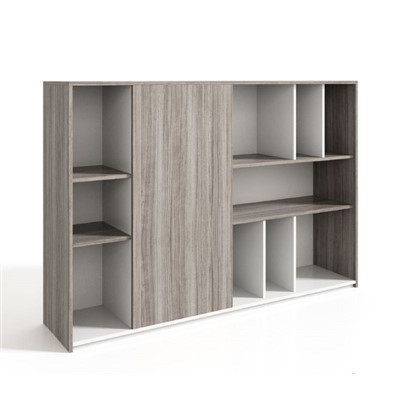
Look, I don’t just sell bookcases – I’ve been helping people fit their homes for years, and the biggest takeaway I can give you is that there’s no “perfect” bookcase, just the one that fits your space, your stuff, and your style. If you’re still stuck, or you want to check out what we’ve got, feel free to reach out for a chat about what would work for your specific room. I’m here to help, no pushy sales stuff, just actual advice from someone who’s been in this long enough to know what works and what doesn’t.
Coffee Tables Reference: 1. Interior Design Magazine. (2022). The Science of Color Matching for Home Furniture. 2. Small Space Living Association. (2021). Sizing Furniture for Compact Residential Areas. 3. Woodworking Trade Journal. (2023). Weight Distribution in Residential Bookcases for Long-Term Durability.
Zhejiang Runcell Science and Innovation Furniture Manufacturing Co., Ltd.
We’re known as one of the most reliable bookcases manufacturers and suppliers in China. We warmly welcome you to buy customized bookcases made in China here from our factory. If you have any enquiry about quotation, please feel free to email us.
Address: Nanxun District, Huzhou City, Zhejiang Province
E-mail: Runcellwm@163.com
WebSite: https://www.cnruncell.com/
