If you’ve ever knelt in a small urban backyard or a compact suburban side yard, staring at a patch of soil you’ve dreamed of turning into a Japanese garden, you’ve probably asked the same question I get dozens of times a week: how do I pick the right stones, without overwhelming the space or breaking the bank? As someone who’s spent 12 years sourcing, sorting, and selling Japanese garden stones, I’ve helped hundreds of homeowners and small landscapers navigate this exact puzzle—and it’s always the small gardens that test the balance most. Unlike large estates where stones can be massive focal points, a 10×15 foot space demands intentionality. Every rock you set down carries weight, both visually and symbolically, so cutting corners or overbuying is a quick way to turn your quiet retreat into a cluttered mess. Japanese Garden Stones

First, let’s get one thing straight: Japanese garden stones aren’t just “rocks.” They carry centuries of design philosophy—each type has a name, a purpose, and a place in the layout. For small gardens, scale is non-negotiable. I’ve seen customers show up with 200-pound boulders for a 8×10 foot yard, thinking more stone equals more authenticity, and they end up having to haul half of it away. The golden rule here is simple: for a small garden (anything under 500 square feet), no single stone should take up more than 5% of the total garden area. That means a focal stone should be roughly the size of a large laundry basket, max. It’s not about size; it’s about presence. A small, well-placed weathered granite boulder can anchor a garden far better than three oversized ones that crowd every corner.
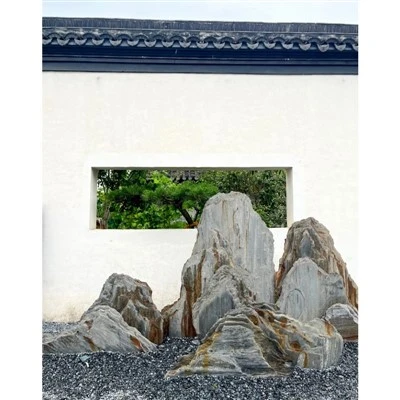
Next, categorize your stones by function, and stick to three core types: focal, supporting, and accent. For small spaces, more than that creates visual noise. Focal stones are the stars—they’re the pieces that draw the eye, the ones that make visitors pause and think. For a compact garden, my go-to recommendations are mountain granite or river cobbles. Mountain granite is perfect because it has that rough, craggy texture that feels rooted in nature, and it comes in soft, irregular shapes that don’t look clunky. River cobbles, on the other hand, are smoother, rounded, and have a quiet elegance that fits narrow spaces. I once supplied a pair of river cobbles to a customer with a 10×12 foot urban backyard; they placed one near the entry and another near the small maple sapling, and suddenly the whole garden felt balanced, not cramped. The key here is to pick stones with subtle natural markings—streaks of gray, faint black veins, or weathered indentations—nothing too loud, like bright red or shiny quartz, which can draw attention away from the rest of the design.
Supporting stones are the workhorses. These are the stones that create paths, define edging, or frame plantings. For small gardens, avoid flat flagstones that are too wide—they can make a narrow path feel even more cramped. Instead, opt for stepping stones that are 12 to 18 inches wide, spaced 12 to 15 inches apart. That’s a comfortable stride, and it keeps the path from dominating the space. I recommend two types of supporting stones for small yards: decomposed granite for fine edging, which is easy to walk on and softens the edges between grass and planting beds, and smaller river rocks (3 to 6 inches in diameter) for filling gaps between stepping stones. Never use too many of the same size supporting stones—mixing one 4-inch cobble with a 6-inch flat rock creates subtle variation without chaos. Also, avoid stacking supporting stones unless you’re using them as a low retaining wall for a tiny slope; too much height here will make the garden feel shorter than it is.
Accent stones are the little touches that bring the garden to life, and they’re where so many small garden owners go wrong. They’re easy to overdo—one customer last year ordered 50 tiny stones to place around a single bonsai, and it looked like a rock pile at a construction site. For accents, stick to no more than three per 100 square feet of garden space. The best accents are the ones that look like they just washed up or fell naturally, not arranged deliberately. I often recommend “pond accents” for small gardens, even if you don’t have a pond—small, flat, slightly curved stones that look like they’d sit along a water’s edge. Place one near a fern or a small bamboo stalk, and it adds a quiet, organic feel without cluttering the space. Another great accent is a single piece of weathered sandstone—its soft, layered texture complements granite and cobbles perfectly, and it’s small enough to tuck into a planting bed without taking up room.
Now, let’s talk about the not-so-fun part: site-specific considerations. A stone that works for a front yard sun garden won’t work for a shaded backyard with a slope. First, think about drainage. Japanese gardens rely on natural water flow, even if you don’t have a pond. If your small garden sits in a low spot that collects rain, you’ll need stones that raise the planting beds slightly to prevent root rot. For this, I recommend slightly larger, flatter granite stones (6 to 8 inches) to create a subtle border around the planting area, which directs water away from sensitive plants. If your garden is on a slope, use smaller stepping stones (10 to 12 inches wide) as retaining points, spaced closer together (8 to 10 inches apart) to create stable levels without taking up too much vertical space.
Lighting is another big one. I’ve had customers pick a dark, shadowed stone for their shaded backyard, and it disappears under the oak tree branches. For shaded areas, go for lighter-colored stones—weathered beige granite or pale gray river cobbles—they reflect a little light and keep the garden feeling open. For sun-drenched yards, darker stones (charcoal gray granite, dark river cobbles) work well; they don’t fade in the sun, and their deep tones create a nice contrast with green plants. Also, think about the size of your plants. If you have a small bonsai or a dwarf pine, a stone that’s too big will make the plant look like it’s hiding. Always hold a potential stone next to your largest plant to check the scale—if the stone is wider than the plant’s canopy, it’s too big.
One mistake I see all the time is overselecting stones in the name of “authenticity.” New customers often want every type of stone they’ve seen in photos—pyrite, sandstone, volcanic rock—and end up with a hodgepodge that doesn’t flow. The beauty of a small Japanese garden is its simplicity. I recommend sticking to a maximum of two main stone types, plus one accent. That’s three total, which is enough to create depth without feeling busy. For example, use mountain granite as your focal, river cobbles as stepping stones, and small sandstone pieces as accents. Or flip that: river cobbles as focal, decomposed granite as edging, and tiny volcanic rock for accents. Keep it consistent, and the garden will feel intentional, not random.
Budget is also a factor, and I’ll be honest—stones can get expensive, especially if you’re picking high-quality weathered pieces. For small gardens, you don’t need rare, museum-quality rocks. The best stones are the ones that look like they’ve been in nature for decades, not the ones that are carved or polished. I always tell customers to look for “natural wear” signs: small cracks, uneven edges, faint color variations. These stones are usually more affordable than perfect ones, and they fit small spaces better because they don’t look too manufactured. Also, don’t be afraid to use smaller stones for multiple purposes. A 4-inch cobble that you might use as an accent can also double as a tiny stepping stone for a narrow path edge, cutting down on both cost and clutter.
Let me share a recent example that stuck with me. A customer in Seattle reached out last spring, saying she had a 9×11 foot side yard that got partial shade, and she wanted a Japanese garden that fit between her apartment and the neighbor’s fence. She’d already bought three 18-inch boulders, and she was stressed because they took up half the space. I helped her return two of them, and instead we sent her one 16-inch mountain granite focal stone, six 12-inch river cobble stepping stones, and ten 4-inch sandstone accents. She placed the focal stone against the fence, stepped stones leading from her back door to a small fern bed, and tucked two accents around the base of a dwarf maple and one near the fern. She texted me a photo a month later, and that small space felt like a retreat, not a cramped gap. The key was we didn’t try to fill every inch—we left empty space, which is just as important as stones in a Japanese garden.
Now, for the final check: before you buy anything, sketch your garden. Even a quick 5-minute drawing will help you visualize where each stone goes. Mark the focal point first, then plan where the path will go, then add accents. Leave 30-40% of the garden as open space—rocks don’t need to cover the whole yard. I can’t stress that enough. Open space (think of it as “negative space”) makes a small garden feel larger and more peaceful. If your sketch has more stones than empty area, scale back. It’s better to have a quiet, balanced garden with a few well-placed stones than a crowded one with too many.
If you’re ready to pick the right stones for your small Japanese garden, or you have questions about scale, types, or sourcing, don’t hesitate to reach out. We work with homeowners, landscapers, and designers across the country to provide natural, authentic stones tailored to small spaces, with no bulk requirements or confusing minimums. We can help you select the perfect focal stones, stepping stones, and accents that fit your garden’s size, lighting, and style—without the stress of guesswork.
Japanese Stepping Stones References:
- Suntory, Japanese Garden Design: Principles and Practices, 2018
- Koizumi, T., The Art of Small Japanese Gardens, 2020
- Japanese Garden Society of America, Guidelines for Residential Japanese Garden Planning, 2021
Orin International Trade Co., Ltd.
With abundant experience, we are one of the most professional japanese garden stones manufacturers and suppliers in China. We warmly welcome you to wholesale custom made japanese garden stones from our factory. If you have any enquiry about cooperation, please feel free to email us.
Address: No.3-1, Shangzhongdi Natural Village, Hexian Village, Shuangta Sub-district, Jiangshan City, Quzhou City, Zhejiang Province
E-mail: atlas@orinstone.com
WebSite: https://www.orinstone.com/
