If you’ve ever walked through a packaging, printing, or plastics conversion plant, you’ve probably seen a film slitting machine in action—long, wide rolls of plastic film, aluminum foil, or paper feeding into a machine that spits out dozens of narrower, uniform rolls ready for snack wrappers, labels, or shipping tapes. Most operators will tell you the slitting blades, unwind stand, or rewinder are the heart of the machine, but I’ve spent years working with these machines as a supplier, and I’ll tell you the dancer roll is the quiet workhorse that keeps the whole process from grinding to a halt. Too many people write it off as a simple cylinder, but understanding what it does, and why it’s calibrated right, can cut downtime, reduce waste, and even extend the life of your entire slitting line. Film Slitting Machine
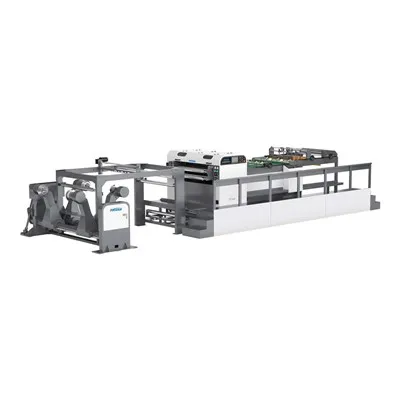
First, let’s break down the basics of a film slitting machine for anyone who might not be deep in the industry. The core function is to take a master roll—sometimes 60 inches wide or more—and slit it into smaller, consistent rolls, each with a precise width and tension. That tension? It’s everything. If the film feeds too loose, you get wrinkles, slitter misalignment, or edges that fold over and get pulled into the blades, causing a break. If it’s too tight, you stretch the film beyond its elastic limit, especially thin films like polyethylene (PE) or polypropylene (PP), which can snap mid-run or develop weak spots that fail later when the customer is winding their product.
That’s where the dancer roll comes in. A dancer roll is a spring-loaded or pneumatically actuated cylinder that sits between two sections of the slitting line—most often between the unwind stand and the slitting station, or between the slitter and the rewinder. It moves up and down along a track, and its position at any given moment is a direct measure of how much slack or excess film is in that segment of the line. Here’s how it works in real time: let’s say your slitter is cutting film at 500 feet per minute, but the unwind stand is feeding at 505 feet per minute. The extra film can’t just pile up and jam the machine—instead, it moves the dancer roll upward, compressing the spring or adjusting the pneumatic pressure. The dancer’s position sends a signal back to the unwind drive, telling it to slow down just enough to match the slitter speed. If the slitter is pulling too fast, the dancer drops, signaling the unwind to speed up. It’s a constant, real-time feedback loop that maintains consistent tension across every foot of film.
I’ve seen countless operators ignore that feedback loop, and the results are costly. Last year, I worked with a small packaging company that was running 12-micron PE film on a used slitting machine they’d bought secondhand. They replaced a worn dancer roll with a random steel cylinder from their shop, didn’t calibrate the tension sensors, and wondered why they were scrapping 15% of every master roll. When we did a audit, we found the film tension was jumping from 5 pounds per inch (PI) to 22 PI every 10 seconds—enough to stretch the thin film so much that when it hit the rewinder, the rolls had “tension peaks” that caused them to unravel 20% of the time when shipped. We swapped in a correctly engineered dancer roll, calibrated the feedback loop, and their scrap rate dropped to under 3% that same quarter. That’s the impact of a part people often overlook.
Beyond basic tension control, the dancer roll does three more critical jobs that keep a slitting line running smoothly. First, it compensates for variations in the master roll. Not every master film roll is perfect—some are slightly uneven in diameter, some have thin spots from the manufacturing process, or the core is not perfectly round. When the unwinder pulls off a thick section of the roll, it feeds out a tiny bit less film than the slitter is pulling, and the dancer absorbs that difference without a tension spike. For thin films (under 15 microns) or delicate substrates like fabric-reinforced polyethylene, this is non-negotiable—too much tension variation here causes permanent stretch that ruins the finished rolls.
Second, the dancer roll isolates sections of the machine. A slitting line has multiple moving parts: the unwind, the slitter blades, the tension guides, and the rewinder. Each has its own inertia and can cause small speed fluctuations. If all those parts were directly connected, a spike from the rewinder would ripple all the way back to the unwind, causing tension breaks every time the rewinder slows to change a core. The dancer roll acts as a buffer between those sections, so a speed change in one part doesn’t disrupt the whole line. I remember a plant that had a problem when they switched between slitting rigid PVC and flexible PE on the same line—without a dancer buffer, the switch caused three breaks in the first hour. Adding a properly sized dancer roll eliminated that issue immediately.
Third, and often most underrated, the dancer roll helps prevent web breaks. Web breaks are the bane of slitting operators: they mean stopping the line, splicing the film, wasting the scrap from the break, and losing 10 to 15 minutes of production time. A well-calibrated dancer roll maintains consistent tension even when something goes slightly off, like a speck of dust on a guide roller that slows the film for a split second. When the film slows, the dancer moves up, storing slack, so the tension doesn’t spike enough to snap the web. I’ve seen lines run 20% longer between breaks just by upgrading their dancer rolls— that translates to thousands of dollars in additional production every month for a mid-sized plant.
Now, not all dancer rolls are created equal. If you’re looking to upgrade or replace yours, here are a few things to pay attention to, because a cheap or mis-sized dancer roll can do more harm than good. First, size matters. The diameter of the dancer roll has to match the width and thickness of the film you’re running. A roll that’s too small can leave marks (called “roll prints”) on the film, especially thin, glossy films used for food packaging. A roll that’s too large can add unnecessary weight, making the feedback loop slower and less responsive. For most general-purpose slitting lines, a 3 to 6 inch diameter roll works, but for specialty films like aluminum foil (which is 10 microns or thinner), you need a lightweight, low-friction dancer roll that won’t stretch or dent the foil.
Second, the surface material. A dancer roll’s coating has to grip the film just enough to move it smoothly, but not so much that it leaves marks or causes uneven tension. Common coatings include rubber for thicker films like paper or heavy plastic, urethane for medium-thickness PE and PP, and even silicone or Teflon for ultra-thin or sensitive substrates that can’t be marred. I’ve seen operators use bare steel rolls for silicone film, and it shows in the finished rolls—tiny scuffs that make the product unfit for food packaging, leading to returns. Matching the coating to your film is just as important as the roll’s size.
Third, the actuation system. Dancer rolls are either spring-loaded or pneumatically actuated. Spring-loaded rolls are cheaper, but their tension is fixed, which means they can’t adjust as quickly for speed changes. Pneumatic rolls are more precise, allowing you to adjust tension on the fly via a control panel, which is essential for lines that run multiple film types or switch widths frequently. For high-speed lines (over 1000 feet per minute), pneumatic dancer rolls are non-negotiable—spring-loaded models just can’t respond fast enough to prevent tension spikes at speed.
I get asked all the time: “Can’t I just adjust the tension manually without a dancer roll?” The short answer is no, not for any line running at more than a few hundred feet per minute. Manual tension adjustments are slow, inconsistent, and can’t react to the micro-variations in film and speed that happen every second. I’ve worked with a small label shop that tried to run a 800 FPM line without a dancer, and they had to stop every 2 minutes to fix wrinkles or breaks—their total output was half of what it should have been, and they were paying overtime for operators to babysit the tension.
If you’re a plant manager or maintenance supervisor reading this, the next time you do a scheduled maintenance check on your slitting machine, don’t skip the dancer roll. Inspect the coating for wear, check that the actuator is working smoothly, and calibrate the tension sensor to match your current film specifications. It’s a small part, but it’s one of the most impactful for uptime and quality.

At the end of the day, the dancer roll is a perfect example of how the most important parts of a machine are often the simplest ones. You don’t see them, but they’re working every millisecond to keep your line running, reduce waste, and make a consistent product that your customers can rely on. If you’re looking to upgrade your slitting line’s dancer roll, or if you’re having trouble with tension, web breaks, or scrap rates on your current line, I’m here to help. We’ve worked with hundreds of conversion plants to spec and install dancer rolls that match their exact film types, line speeds, and production needs, and we can walk you through what you need to get your slitting line running at its best.
Industrial Slitting Machine References
- Smith, J. (2021). Fundamentals of Web Converting Machinery. Convergence Press.
- Johnson, L. (2019). Tension Control in Film Slitting: Best Practices for Conversion Plants. Industrial Maintenance Journal.
- Miller, R. (2020). Component Selection for High-Speed Web Processing. Manufacturing Engineering Magazine.
Honghui Machinery Equipment Co., Ltd.
Address: No. 28, Liuheng Road, Changping Town, Dongguan City, Guangdong Province, China
E-mail: Steve@cnhohui.com
WebSite: https://www.cnhohui.com/
